


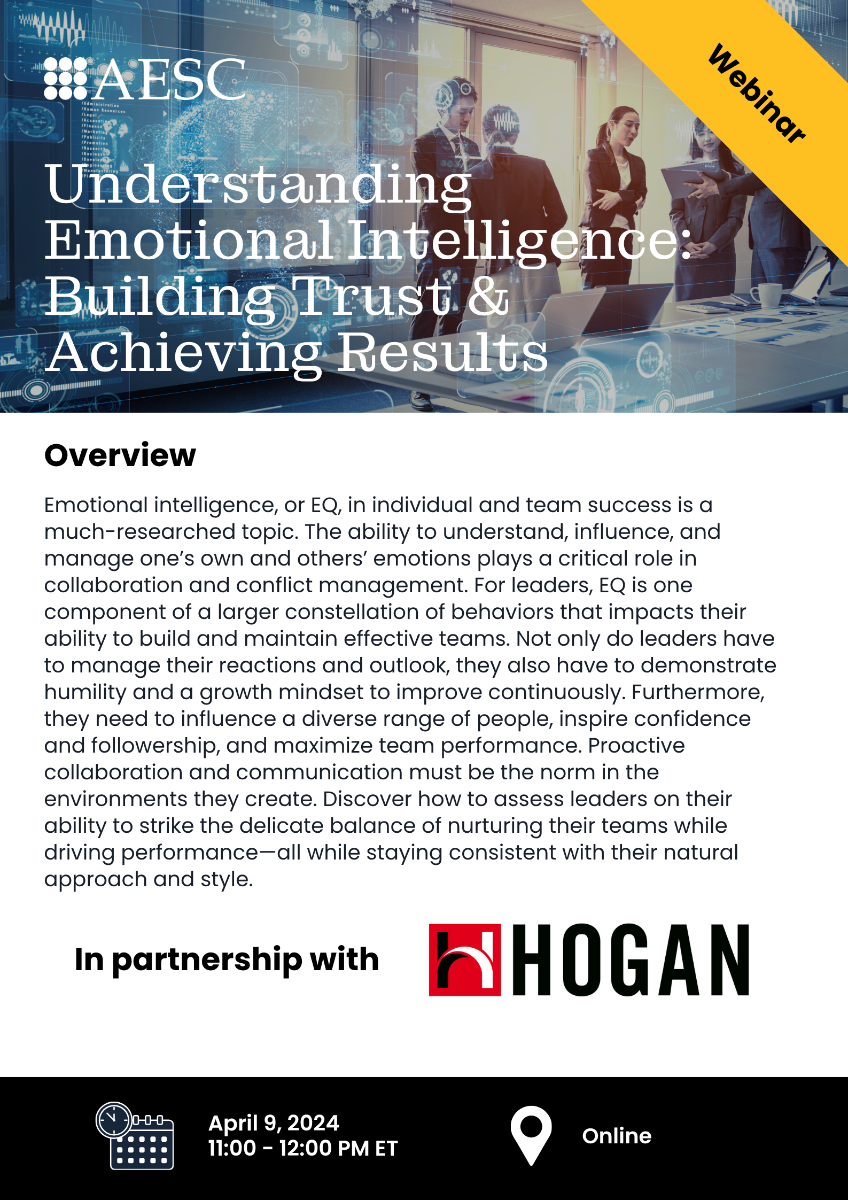
Emotional intelligence is a critical factor in leadership effectiveness, influencing how leaders build relationships, navigate conflict, inspire teams, and drive organizational performance. While technical expertise and strategic thinking remain important, organizations increasingly recognize that a leader's ability to understand and manage emotions—both their own and those of others—can significantly impact team engagement, collaboration, and long-term success.
In this webinar, participants will explore the role of emotional intelligence within executive leadership and learn how to evaluate these capabilities during the executive search and assessment process. The session examines how emotionally intelligent leaders demonstrate self-awareness, resilience, humility, adaptability, and a growth mindset while fostering high-performing teams and healthy organizational cultures. Participants will also gain practical strategies for assessing these qualities in executive candidates and understanding how emotional intelligence complements broader leadership competencies.
By the end of the webinar, attendees will be better equipped to identify emotionally intelligent leadership behaviors and help clients select leaders who can build trust, strengthen teams, and deliver sustained organizational performance. Participants will learn how to:
- Understand the role of emotional intelligence in executive leadership effectiveness and organizational performance.
- Recognize the key components of emotional intelligence, including self-awareness, self-management, empathy, and relationship management.
- Assess executive candidates' ability to build trust, foster collaboration, and lead high-performing teams.
- Identify leadership behaviors that demonstrate resilience, humility, adaptability, and a growth mindset.
- Evaluate how emotional intelligence influences conflict resolution, communication, and employee engagement.
- Incorporate emotional intelligence into executive assessment and leadership evaluation processes.